
Reliable
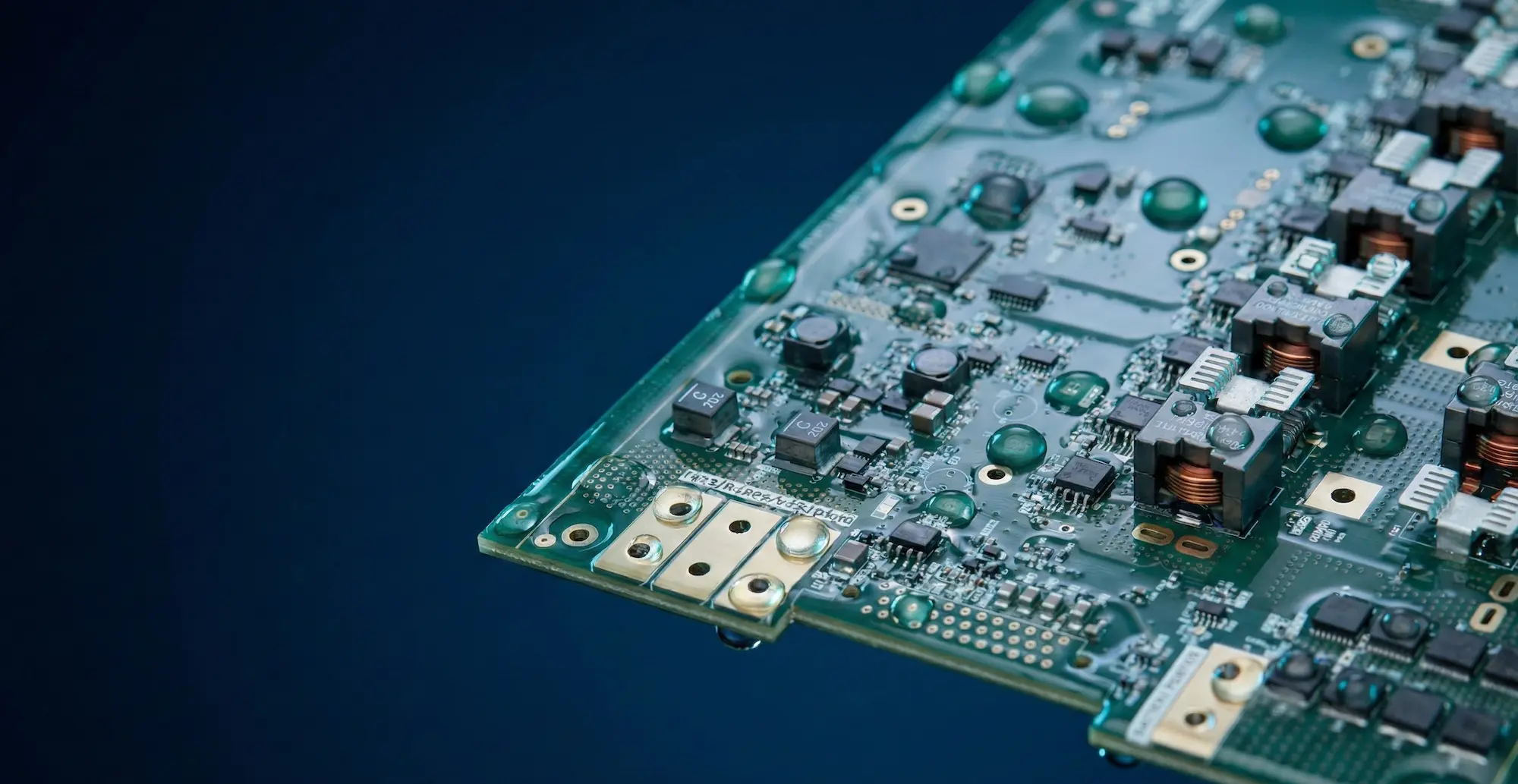
Conformal Coating Services
for Complex PCBA
Protect your electronics reliably
—while reducing long-term failure risks and maintenance costs.
Eliminate Field Failures.
Choose the Right Armor.
Don't let moisture, chemicals, or thermal shock kill your PCBs.
Match your environment to the perfect coating solution.
Acrylic Conformal Coating (AR)
→ Swipe right for performance metrics
Without Coating Risk:
Ion migration causes avg. $4.7 million/year in field failures for unprotected consumer electronics.
The industry standard for general electronics. Acrylic provides excellent moisture and fungus resistance with the easiest reworkability—perfect for high-mix, low-volume production.
- Cost-effective: 40% cheaper than urethane alternatives
- Fast turnaround: Dry to touch in 10 minutes
- High dielectric strength: 400V/mil protection
Performance Metrics
"Reduced our rework time by 60% compared to urethane."
— TechLead, Industrial IoT Co.
Silicone Conformal Coating (SR)
→ Swipe right for performance metrics
Thermal Cycling Risk:
PCB warping from -40°C to 150°C cycles causes 23% early failures in automotive apps.
Engineered for extreme thermal shock. SR maintains flexibility across -55°C to 200°C, absorbing stress from vibration and thermal expansion in automotive and outdoor applications.
- Extreme temp: -55°C to 200°C continuous
- Vibration damping: 40% stress reduction
- UV resistance: 10+ year outdoor life
Performance Metrics
"Passed 1000hr 85/85 testing with zero delamination."
— QA Mgr, Automotive Lighting
Polyurethane Conformal Coating (UR)
→ Swipe right for performance metrics
Chemical Exposure Risk:
Industrial solvents cause 68% coating failure in unprotected controls within 2 years.
The chemical armor for harsh environments. UR forms a hard, abrasion-resistant barrier against fuels, solvents, and moisture—ideal for aerospace and marine applications where failure isn't an option.
- Chemical resistance: MIL-I-46058C qualified
- Abrasion resistance: 5x better than AR
- Tin whisker mitigation: NASA preferred
Performance Metrics
"Only coating that survived 500hr salt fog testing."
— Lead Engineer, Marine Controls
Still Unsure Which Coating Fits Your Product?
Our IPC-certified engineers will analyze your PCB layout, operating environment, and cost targets. Get a recommendation within 24hours.
Customized Protection Strategies
From rapid prototyping to mass production, we align our coating methods to your volume and complexity—ensuring you never pay for tooling you don't need or wait for manual processes that scale too slowly.
Automated Selective Coating
Best for High-Volume & Consistency.
- Eliminates masking tape costs
- ±1mm precision for keep-out zones
Spraying & Dipping
Best for Complex 3D Geometries.
- Ensures full wrap-around coverage
- Ideal for hidden spots under ICs
Manual Brushing
Best for NPI & Quick Prototypes.
- Zero setup cost & instant start
- Perfect for urgent sample runs
Prevent Field Failures
Before They Happen
A coating is only as good as its verification. We don't just apply protection; we prove it. By strictly following IPC-CC-830 standards, we ensure your boards survive humidity, salt mist, and thermal shock.
Contact Engineers Via WhatsApp100% UV Inspection
Eliminates "skipped zones." We ensure moisture finds no entry point.
Salt & Mist Check
Guarantees corrosion resistance even during long ocean shipping.
Thickness Check
Verifies dielectric strength. Too thin = short risk; Too thick = cracks.
Adhesion Testing
Ensures coating won't peel off under thermal shock or stress.
State-of-the-Art Facility
A glimpse into our conformal coating production line.
Automated Selective Coating
High-speed precision application
Inline UV Curing
Rapid curing for continuous flow
IPC-CC-830
Qualified to IPC standards for reliability and performance.
UL 746E
Using UL-certified coating materials for safety compliance.
RoHS & REACH
Fully compliant eco-friendly materials available.
Full Traceability
Batch tracking for all coating materials and processes.
Design for Coating
Lower Costs, Zero Defects.
Don't let poor PCB layout inflate your manufacturing costs. By following these three simple layout rules, you can eliminate manual masking, prevent capillary leakage, and accelerate your production cycle.
Define Keep-Out Zones
Pain: Connectors wicking fluid
Leave a minimum 3mm clearance around unsealed connectors, tactile switches, and test points. This allows the selective coating valve to move freely without spraying onto sensitive contacts.
Benefit: Eliminates manual masking
Smart Grouping
Pain: Complex robot path
Group tall components and components requiring coating (like high-pin-count ICs) together. Keep non-coated components (like RF modules) distinctly separated on the board layout.
Benefit: Accelerates UPH processing
Mind Your Vias
Pain: Unwanted capillary leakage
Avoid placing un-tented (un-masked) vias directly underneath or immediately adjacent to BGA components. Low-viscosity coatings can flow through these vias and damage mating surfaces.
Benefit: Prevents secondary rework
Success Stories

Automotive Communication Module
Challenge: The Communication Module faced extreme thermal cycling and road vibration. Standard coatings were cracking.
Solution: We applied a high-flexibility Silicone (SR) coating with automated selective spray to avoid connector pins.
Material
Silicone (SR)
Result
0% Field Failures
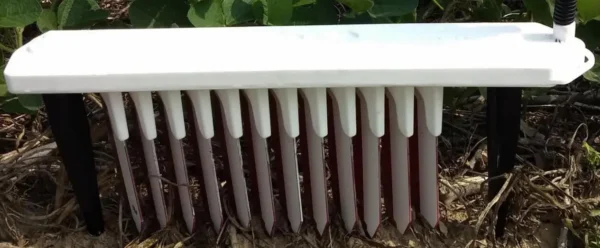
Agricultural Soil Monitor
Challenge: The Agricultural Soil Monitor runs 24/7 outdoors in farmland soil, enduring extreme environmental erosion from UV radiation, rainfall, acidic substances and dust.
Solution: Dip-coated the PCB with conformal coating. Encapsulate the PCB with a custom-molded white polyurethane casing of 65D hardness, which is formulated with UV inhibitors for enhanced outdoor durability.
Material
Polyurethane (UR)
Result
Extended Lifespan 3x
Conformal Coating FAQs
Q
What is the typical coating thickness?
What is the typical coating thickness?
Typically between 25-75 microns (1-3 mils) for acrylics and urethanes, and slightly thicker for silicones (50-200 microns), depending on IPC-A-610 standards. We measure thickness using eddy current gauges on test coupons to ensure consistency across your production batch.
Q
Do I need to mask connectors before coating?
Do I need to mask connectors before coating?
Yes. We physically mask connectors, switches, and test points using high-temperature tapes or custom fixture masking for manual brushing/spraying/dipping. For automated selective coating, we program the machine to create ±1mm precision keep-out zones around critical components.
Q
Can you coat under BGA components?
Can you coat under BGA components?
Standard spraying relies on capillary action to reach under components, but coverage beneath BGAs is limited. For full underfill protection, we recommend a dedicated capillary underfill process before conformal coating, which creates a complete seal between the component and PCB.
Q
How do you test coating coverage and quality?
How do you test coating coverage and quality?
All our coating materials contain UV tracers. We perform 100% visual inspection under UV black light to ensure complete coverage and identify any de-wetting or pinholes. Additionally, we conduct periodic adhesion tests (tape test per IPC-TM-650) and dielectric withstand voltage testing.
Q
Acrylic vs. Urethane vs. Silicone: Which should I choose?
Acrylic vs. Urethane vs. Silicone: Which should I choose?
Choose Acrylic for easy rework and general humidity protection. Use Urethane for chemical resistance and abrasion protection in harsh industrial environments. Select Silicone for high-temperature applications (>125°C) or when you need flexibility for thermal cycling. We also offer Parylene for medical/ aerospace applications requiring ultra-thin, pinhole-free coverage.
Q
Can conformal coating be repaired or removed?
Can conformal coating be repaired or removed?
Acrylics can be removed easily with solvent (e.g., isopropyl alcohol) for component rework. Urethanes require more aggressive solvents and mechanical scraping. Silicones are the most difficult to remove and often require specialized peeling tools or thermal methods. We can perform localized rework at component level while preserving the surrounding coating.
Other Assembly Services Available
From PCB fabrication to fully assembled products. Streamline your supply chain with our integrated manufacturing services.
PCB Assembly
SMT and THT assembly with 01005 component capability. Complete with AOI, X-ray inspection, and IC programming.
Explore PCBA ServicesParylene Coating
In-house CVD parylene coating for ultimate moisture and chemical protection. Ideal for medical devices and harsh environments.
Learn About Parylene CoatingBox Build Assembly
Complete electromechanical integration: enclosures, cable harnesses, PCB mounting, and functional testing to finished product.
View Box Build ServiceNeed a complete manufacturing partner?
Explore All Turnkey ServicesStart Your Projects Manufacturing Today!
Whether you need a quick quote or technical consultation, we're here to help.
Quick Response via WhatsApp
Get instant answers to your questions
Connect directly with our technical team for immediate assistance.
We typically respond within 30 minutes during business hours.
Business Hours: Mon-Fri 9:00-18:00 (GMT+8)